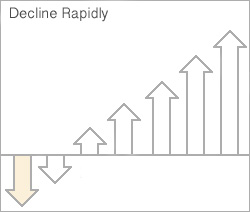
Employment of jewelers and precious stone and metal workers is projected to decline 11 percent from 2014 to 2024. Employment of these workers is expected to decline because most jewelry is now manufactured outside of the United States. Additionally, traditional jewelry stores may continue to lose some of their customers to nontraditional sellers, such as department stores, and this shift is also likely to result in declined employment levels for jewelers and precious stone and metal workers.
Job Prospects
Job opportunities should be available for bench jewelers who are skilled at design or repair. Some jewelers will be needed to replace those who retire or who leave the occupation for other reasons. As jewelers retire, shops lose expertise and knowledge that is difficult and costly to replace.
Job opportunities in jewelry stores and repair shops should be best for those who have graduated from a trade school or training program and have related work experience.
Strong competition is expected for mass manufacturing jobs and for jewelry designers who wish to create their own jewelry lines. Although demand for customized and boutique jewelry is strong, it is often difficult for independent designers to establish themselves in the market. Experience with computer-aided design (CAD) makes creating custom pieces of jewelry easier.
During economic downturns, demand for jewelry products and jewelers usually decreases. However, demand for repair workers should remain strong even during economic slowdowns because maintaining and repairing jewelry is cheaper than buying new jewelry.
Jewelers and Precious Stone and Metal Workers
Percent change in employment, projected 2014-24
Total, all occupations
7%
Production occupations
-3%
Jewelers and precious stone and metal workers
-11%
Note: All Occupations includes all occupations in the U.S. Economy. Source: U.S. Bureau of Labor Statistics, Employment Projections program