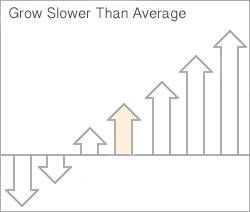
Employment of biological scientists is projected to grow about as fast as average for all occupations over the 2004-14 period, as biotechnological research and development continues to drive job growth. However, doctoral degree holders face competition for basic research positions. The Federal Government funds much basic research and development, including many areas of medical research that relate to biological science. Recent budget increases at the National Institutes of Health have led to large increases in Federal basic research and development expenditures, with research grants growing both in number and in dollar amount. Nevertheless, the increase in expenditures is expected to slow significantly over the 2004-14 projection period, resulting in a highly competitive environment for winning and renewing research grants. Furthermore, should the number of advanced degrees awarded continue to grow, applicants for research grants are likely to face even more competition. Currently, about 1 in 3 grant proposals are approved for long-term research projects. In addition, applied research positions in private industry may become more difficult to obtain if increasing numbers of scientists seek jobs in private industry because of the competitive job market for independent research positions in universities and for college and university faculty.
Opportunities for those with a bachelor's or master's degree in biological science are expected to be better. The number of science-related jobs in sales, marketing, and research management for which non-Ph.D.s usually qualify is expected to exceed the number of independent research positions. Non-Ph.D.s also may fill positions as science or engineering technicians or as medical health technologists and technicians. Some may become high school biology teachers.
Biological scientists enjoyed very rapid gains in employment between the mid-1980s and mid-1990s— reflecting, in part, increased staffing requirements in new biotechnology companies. Employment growth should slow somewhat, along with a slowdown in the number of new biotechnology firms; some existing firms will merge or be absorbed by larger biotechnology or pharmaceutical firms. However, much of the basic biological research done in recent years has resulted in new knowledge, including the isolation and identification of genes. Biological scientists will be needed to take this knowledge to the next stage, which is understanding how certain genes function within an entire organism, so that gene therapies can be developed to treat diseases. Even pharmaceutical and other firms not solely engaged in biotechnology use biotechnology techniques extensively, spurring employment increases for biological scientists. For example, biological scientists are continuing to help farmers increase crop yields by pinpointing genes that can help crops such as wheat grow worldwide in areas that currently are hostile to the crop. Expected expansion of research related to health issues such as AIDS, cancer, and Alzheimer's disease also should create more jobs for these scientists. In addition, efforts to discover new and improved ways to clean up and preserve the environment will continue to add to job growth. More biological scientists will be needed to determine the environmental impact of industry and government actions and to prevent or correct environmental problems such as the negative effects of pesticide use. Some biological scientists will find opportunities in environmental regulatory agencies; others will use their expertise to advise lawmakers on legislation to save environmentally sensitive areas. There will continue to be demand for biological scientists specializing in botany, zoology, and marine biology, but opportunities will be limited because of the small size of these fields. New industrial applications of biotechnology, such as changing how companies make ethanol for transportation fuel, also will spur demand for biological scientists.
Marine biology, despite its attractiveness as a career, is a very small specialty within biological science. Prospective marine biology students should be aware that those who would like to enter this specialty far outnumber the very few openings that occur each year for the type of glamorous research jobs that many would like to obtain. Almost all marine biologists who do basic research have a Ph.D.
Biological scientists are less likely to lose their jobs during recessions than are those in many other occupations because many are employed on long-term research projects. However, an economic downturn could influence the amount of money allocated to new research and development efforts, particularly in areas of risky or innovative research. An economic downturn also could limit the possibility of extension or renewal of existing projects.